en
en  English
 中文简体
中文简体
 русский
 عربى
عربى
Content
- 1 What the New Elevator Code Means for the Industry
- 2 Key Changes in ASME A17.1-2025
- 3 Freight Elevator Requirements Under the New Code
- 4 Fire Safety and Emergency Operations for Freight Elevators
- 5 Global Elevator Codes and What They Mean for Freight Equipment Manufacturers
- 6 Compliance Timeline and Next Steps for Building Owners
What the New Elevator Code Means for the Industry
The ASME A17.1-2025 Safety Code for Elevators and Escalators — published jointly with Canada's CSA B44-2025 — is now the governing standard for vertical transportation across North America. As the twenty-fourth edition of a code that dates back to 1921, ASME A17.1-2025 spans over 500 pages and sets binding requirements for the design, construction, installation, operation, testing, inspection, maintenance, alteration, and repair of elevators, escalators, dumbwaiters, moving walks, and material lifts.
The new code applies to new installations only, with limited exceptions for certain maintenance and safety sections that cover both new and existing equipment. For building owners, facility managers, and elevator manufacturers, understanding what has changed under ASME A17.1-2025 is essential for maintaining compliance and avoiding costly retrofits.
Key Changes in ASME A17.1-2025
The 2025 edition introduces several significant revisions that affect how elevators are designed and integrated into building systems:
- Emergency Responder Radio Coverage (ERRC): Updated requirements mandate radio coverage equipment inside elevator hoistways, ensuring first responders can maintain communication during emergencies. This builds on NFPA 1225-2022 provisions requiring 99% radio coverage in all elevator cars in critical areas.
- Elastomeric Buffers: New requirements address the use and performance standards for elastomeric buffers, which absorb the kinetic energy of elevator cars at the end of travel.
- Seismic Requirements: The seismic safety provisions have been updated to reflect current engineering practices, particularly relevant in earthquake-prone regions.
- Two-Way Communication: Any new elevator must include an interactive two-way communication panel accessible 24/7, operable without audio, and capable of visual, text, or video communication — addressing the needs of passengers with disabilities.
- Internet-Connected Communication: For elevators operating at 60 feet or above, voice and video communication via internet connection is now required in several jurisdictions that have adopted this provision.
The code is structured into distinct parts covering electric elevators, hydraulic elevators, special application elevators, escalators and moving walks, and dumbwaiters and material lifts, making it easier for engineers and inspectors to locate the requirements relevant to a specific equipment type.
Freight Elevator Requirements Under the New Code
Freight elevators occupy a distinct regulatory category under ASME A17.1. By definition, a freight elevator is one "used primarily for carrying freight and on which only the operator and the persons necessary for unloading and loading the freight are permitted to ride." This distinction has important compliance implications.
Under the new elevator code, freight elevators are subject to dedicated requirements that prioritize structural integrity, load capacity management, and operator safety rather than passenger accessibility. Key freight-specific provisions include:
- Structural integrity: The cab, platform, and guide rail system must be engineered to handle concentrated, uneven, and dynamic loads typical of industrial and warehouse environments.
- Loading and unloading safety: Code provisions address safe procedures for powered industrial trucks and heavy equipment entering and exiting the elevator platform.
- Door and gate interlocks: Freight elevators must use compliant interlock systems — often horizontal bi-parting gates — to prevent movement when doors are open, using the same interlock technology specified for passenger elevators.
- Accessibility exemption: Freight elevators are not required to comply with ADA or ABA accessibility standards and cannot substitute for a passenger elevator in providing an accessible route between floors.
| Feature | Passenger Elevator | Freight Elevator |
|---|---|---|
| ADA/ABA Compliance Required | Yes | No |
| Two-Way Communication Panel | Required | Operator-based |
| Door/Gate Interlock | Required | Required |
| Firefighter Emergency Operation | Required (Phase I & II) | Varies by jurisdiction |
| Accessible Route Function | Can satisfy requirement | Cannot satisfy requirement |
Fire Safety and Emergency Operations for Freight Elevators
One of the most consequential areas of the new elevator code for commercial and industrial facilities is the expanded integration of elevator controls with fire alarm and sprinkler systems. This affects freight elevators in warehouses, manufacturing plants, and multi-story distribution centers.
Under the 2025 standards and related 2025 NFPA 13 updates, several fire safety provisions now apply to or near elevator hoistways:
- Phase I Emergency Recall: Elevators 25 feet or more above the main floor — including qualifying freight elevators — must return to a designated egress point when Phase I is activated, either manually by key switch or automatically by a fire alarm initiating device.
- Shunt-trip operation: Sprinkler activation in elevator machine rooms or hoistways triggers shunt-trip disconnects to cut power and prevent electrocution hazards. The 2025 NFPA 72 update includes a time-delay provision for water flow switches before Phase I recall is triggered.
- Hoistway sprinklers: The combustibility of the elevator suspension means (steel rope vs. coated belt) affects whether sprinklers are required inside the hoistway — a nuanced decision point for freight elevator installations.
- Door contact monitoring: Jurisdictions such as New York City require passenger and freight elevators to continuously monitor for faulty door contact circuits, preventing movement when a fault is detected.
Facility managers planning new freight elevator installations should coordinate with both elevator consultants and fire life safety engineers to ensure the integrated system complies with the new elevator code, local building codes, and NFPA requirements simultaneously.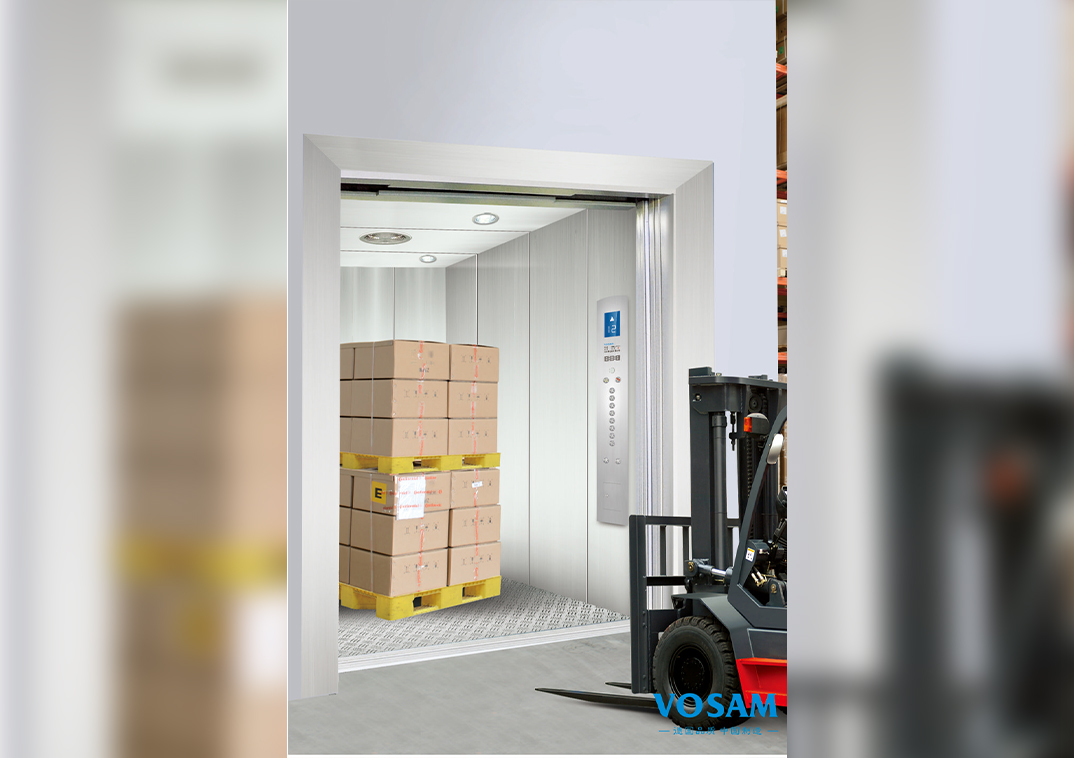
Global Elevator Codes and What They Mean for Freight Equipment Manufacturers
While ASME A17.1-2025 governs North America, freight elevator manufacturers supplying equipment globally must also navigate other major regulatory frameworks:
- EN 81-20 / EN 81-50 (Europe): The European Committee for Standardization's EN 81 series covers freight lifts in industrial and commercial environments. Since August 2017, all elevators in Europe must comply with EN 81-20 (installation requirements) and EN 81-50 (testing). Recent updates focus on energy efficiency and smart maintenance technologies.
- GB 7588 (China): Introduced in 1995 and regularly updated, China's national elevator standard aligns closely with international norms while incorporating local safety technology requirements — critical for manufacturers targeting the world's largest elevator market.
- JIS A 4301 (Japan): Japan's elevator code emphasizes seismic resilience above all, with strict testing protocols designed to ensure freight and passenger elevators continue operating safely during and after earthquakes.
By 2023, there were an estimated over 20 million elevators and escalators in operation worldwide. For freight elevator manufacturers and suppliers, aligning products with multiple regional codes — while tracking updates like the new ASME A17.1-2025 — is both a compliance obligation and a competitive advantage in global markets.
Compliance Timeline and Next Steps for Building Owners
ASME A17.1-2025 takes effect for new installations as of the effective date published in its Summary of Changes, with two specific sections (8.10.1.1.3 and 8.11.1.1) effective immediately upon publication. Individual states and jurisdictions adopt the code on their own schedule — most states currently enforce an earlier edition of ASME A17.1, and adoption timelines vary significantly.
For building owners and facility operators planning new elevator installations or major alterations, the recommended steps are:
- Confirm which edition of ASME A17.1 your jurisdiction currently enforces before specifying equipment.
- Determine whether the planned installation is a passenger, freight, or service elevator, as this classification drives the applicable code requirements.
- Engage a qualified elevator consultant early in the design phase, particularly for freight applications involving powered industrial trucks or hazardous materials.
- Coordinate with fire life safety engineers for hoistway sprinkler decisions, ERRC provisions, and fire alarm interface requirements.
- Review inspection and testing obligations under ASME A17.1-2025 Section 8 and confirm a compliant maintenance program is in place from day one of operation.
The new elevator code represents a meaningful step forward in safety, communication, and seismic resilience. For freight elevator applications specifically, the interaction between structural load requirements, fire safety systems, and door interlock technology demands a coordinated, expert-led approach to compliance.