en
en  English
 中文简体
中文简体
 русский
 عربى
عربى
Content
- 1 What Is Freight Elevator Weight Capacity?
- 2 Freight Elevator Loading Classes Under ASME A17.1
- 3 Freight Elevator Capacity by Elevator Type
- 4 Elevator Emergency Phone Requirements: The Legal Framework
- 5 Key Technical Requirements for Elevator Emergency Communication Systems
- 6 ADA Compliance for Elevator Emergency Phones
- 7 Phone Line Technology: POTS, Cellular, and VoIP Options
- 8 Consequences of Non-Compliance
What Is Freight Elevator Weight Capacity?
Freight elevator weight capacity refers to the maximum load — measured in pounds or kilograms — that an elevator is engineered and certified to carry under normal operating conditions. Unlike passenger elevators, which are designed primarily around human traffic, freight elevators are built to move heavy cargo, industrial equipment, and bulk materials across building floors efficiently and safely.
Freight elevators typically handle loads ranging from 5,000 lbs to 10,000 lbs (approximately 2,270 kg to 4,540 kg), though heavy-duty industrial models can be configured to support significantly greater weights. In contrast, standard passenger elevators are rated for 2,500 lbs to 5,000 lbs, and residential home elevators carry as little as 500 lbs to 1,500 lbs.
The rated capacity of any freight elevator is determined by several factors: the inside net platform area, the structural design of the car and hoisting mechanism, the class of loading it is designated for, and the applicable building codes at the time of installation. A mandatory metal capacity plate must be prominently displayed inside every freight elevator car, identifying the maximum load and loading class.
Freight Elevator Loading Classes Under ASME A17.1
The ASME A17.1 Safety Code for Elevators and Escalators is the governing standard across the United States for freight elevator capacity and loading classifications. This code assigns every freight elevator one of five loading classes based on how cargo is handled on and off the car platform.
Class A — General Freight Loading
This is the most common classification, covering most standard freight and passenger-service elevators. Under Class A, the rated load must be based on at least 50 lbs per square foot of inside net platform area. The weight of any single piece of freight — or any single hand truck and its load — cannot exceed one-quarter (25%) of the elevator's total rated capacity. Loading and unloading must be performed manually or with a hand truck; powered industrial equipment is not permitted under this class.
Class B — Motor Vehicle Loading
Class B applies exclusively to freight elevators designed to transport motor vehicles. The rated load is calculated at no less than 30 lbs per square foot of platform area, and vehicles may be transported up to the full stated capacity of the elevator. This class is typically found in automotive facilities, parking structures, and car dealerships.
Class C — Industrial Truck Loading
Class C covers elevators that handle cargo using powered industrial trucks such as forklifts. It is subdivided into three categories:
- Class C1: The industrial truck carries both load and itself on the elevator during transit. The combined weight of the truck and load must not exceed the rated capacity.
- Class C2: The industrial truck is used only to load and unload the platform and does not ride with the cargo. Static load during loading and unloading may reach up to 150% of the rated capacity, but the loading device must be removed before the elevator operates.
- Class C3: Allows for heavy concentration loading where the combined weight of load and equipment does not exceed the stated rated capacity. These elevators are typically used to transport single large pieces equal to the full capacity of the car.
Class C loading is not permitted for limited-use/limited-application (LULA) elevators or accessibility lifts. If an elevator's loading class is unknown, it must be treated as Class A to maintain safety.
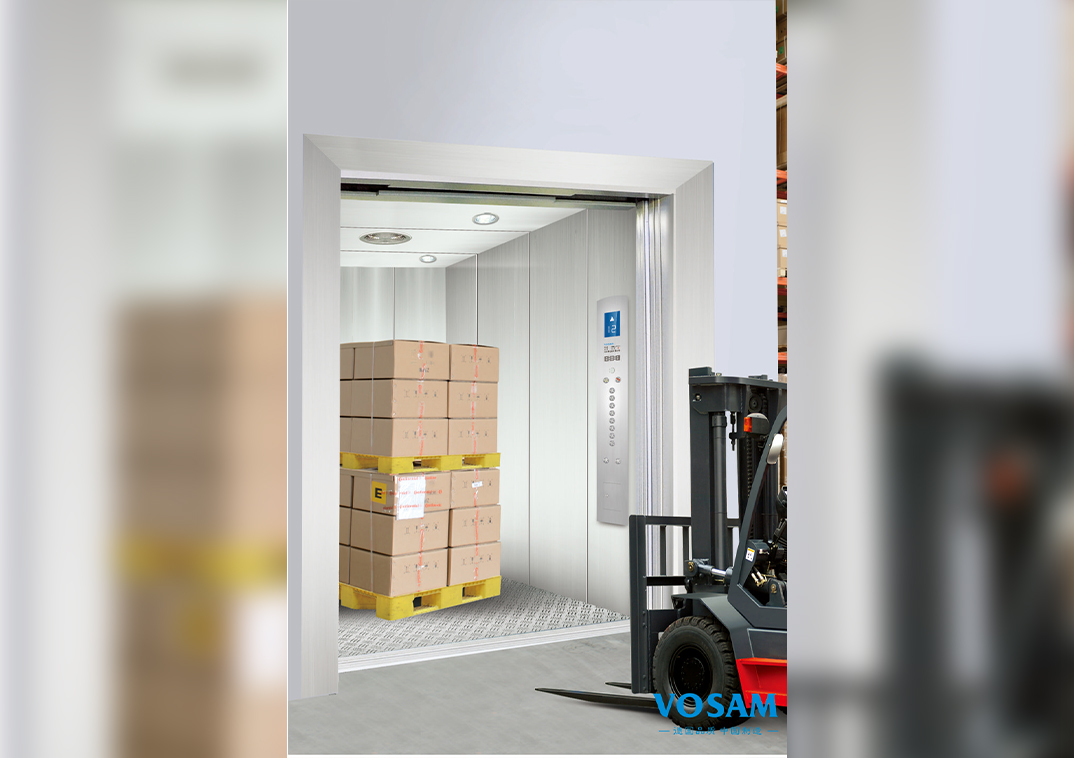
Freight Elevator Capacity by Elevator Type
Freight elevator capacity varies considerably depending on the application. The table below summarizes typical weight limits across different elevator categories:
| Elevator Type | Typical Weight Capacity | Common Use |
|---|---|---|
| Residential Elevator | 500 – 1,500 lbs | Home use, 2–5 occupants |
| Commercial Passenger Elevator | 2,500 – 5,000 lbs | Office buildings, hotels |
| Standard Freight Elevator | 5,000 – 10,000 lbs | Warehouses, retail, manufacturing |
| Heavy-Duty Industrial Freight | 10,000 lbs and above | Heavy industry, vehicle transport |
Under the ASME A17.1 code, minimum rated loads for Class A and Class C freight elevators must not fall below 50 lbs per square foot of net platform area. Building owners who need to increase an existing elevator's capacity must often replace major components — including the car structure, cables, and motor — or install an entirely new system, as retrofitting is both technically complex and costly.
Elevator Emergency Phone Requirements: The Legal Framework
Emergency communication systems in elevators are not optional — they are a legal requirement under multiple overlapping federal and industry codes. Three primary regulatory frameworks govern elevator emergency phone requirements in the United States:
- ASME A17.1 — Safety Code for Elevators and Escalators: The primary technical standard mandating two-way emergency communication in all elevator cars.
- Americans with Disabilities Act (ADA): Federal civil rights legislation requiring that emergency communication systems be fully accessible to individuals with disabilities, including those who are deaf, hard of hearing, or speech-impaired.
- International Building Code (IBC): Establishes construction-level requirements for emergency communication in new builds and major renovations, and in its 2021 edition defers to ASME A17.1 as the authoritative elevator code.
Compliance obligations apply at the state and local level. The ASME code edition that a jurisdiction has adopted determines which specific technical requirements are currently enforceable. Importantly, freight elevators used to fulfill a required accessible route between floors must also comply with passenger elevator emergency communication standards — the freight designation alone does not exempt a car from these requirements.
Key Technical Requirements for Elevator Emergency Communication Systems
The 2019 edition of ASME A17.1 (requirement 2.27.1) significantly updated emergency communication standards, building on earlier requirements while adding new capabilities to address modern technology and reduce the high rate of false alarm activations — industry data indicates that approximately 95% to 98% of all emergency phone activations are false alarms, straining call center and maintenance resources and potentially diverting attention from genuine entrapments.
Two-Way Communication
All elevator emergency phones must support two-way voice communication between the trapped passenger and authorized emergency personnel. The system must be activated by pressing a push button — handsets with cords are no longer compliant, as they are inaccessible during a medical emergency or for passengers who are unconscious. The highest operable part of the communication device must be mounted no more than 48 inches from the car floor, ensuring accessibility for wheelchair users.
Automatic Location Identification
When an emergency call is placed, the system must automatically transmit the building address and specific elevator number to the monitoring party — without requiring the caller to speak. This is critical for passengers who are unable to communicate verbally. In buildings with multiple elevators sharing a phone system, each individual car must provide unique identifying information.
Visual Acknowledgment Signal
A visual indicator — typically a labeled LED light — must confirm to the passenger inside the car that the emergency call has been received. This signal must be located on the same control panel as the "HELP" push button. The light must extinguish once the communications link is terminated, providing clear feedback on call status.
Video Monitoring (ASME 2019+)
Under the 2019 ASME update, authorized personnel responding to an emergency call must have access to video footage of the entire car floor. This enables responders to determine whether a genuine entrapment has occurred — even if no verbal communication is possible due to a language barrier, disability, or diminished cognitive function. The minimum field of view must be sufficient to detect the smallest likely passenger, including a young child.
Backup Power Requirements
Emergency communication systems must operate on backup power in the event of a building power outage. The power source must be capable of operating the audible signaling device and illuminating the alarm switch for at least one hour, and must support two-way voice communication for a minimum of four hours. The system must automatically switch to standby power when normal supply is interrupted.
24/7 Monitored Phone Line
The emergency phone line must connect directly and automatically to a trained monitoring service staffed around the clock, every day of the year. The system cannot require a caller to dial a number — direct connection is mandatory. This also means elevator phones cannot be programmed to dial 911 directly; they must connect to a dedicated monitoring center that can assess the situation and dispatch appropriate help.
ADA Compliance for Elevator Emergency Phones
The ADA requirements for elevator emergency communication are specifically designed to eliminate barriers for passengers with disabilities. Beyond the physical mounting height of 48 inches, the ADA mandates that the activating button be permanently identified with a raised tactile phone symbol and the word "HELP" — either on the button itself or directly adjacent to it. Operating instructions must be provided in both visual and tactile form.
For passengers who are deaf, hard of hearing, or speech-impaired, newer ASME and ADA requirements mandate a text-based communication alternative. This requires the monitoring system to include prewritten messages that operators can display on a screen inside the elevator car, along with response buttons allowing riders to reply "Yes" or "No." This non-verbal communication pathway ensures that all passengers — regardless of ability — can effectively communicate their status and receive assistance.
Under ADA guidelines, emergency phones must also provide visual indicators such as flashing lights to confirm that a call has been placed, supplementing the audible signal acknowledgment for passengers who cannot hear standard tones.
Phone Line Technology: POTS, Cellular, and VoIP Options
Historically, elevator emergency phones relied on dedicated copper POTS (Plain Old Telephone Service) landlines, which offered inherent power backup advantages. However, as copper infrastructure ages and telecom providers raise rates or discontinue POTS service, building owners are increasingly migrating to cellular and VoIP-based solutions.
Current ASME code does not require a POTS line specifically — it requires a reliable connection capable of sustaining at least four hours of operation on backup power. Cellular and VoIP solutions that meet these power backup and reliability requirements are generally code-compliant, though local fire codes may impose additional constraints. Some jurisdictions mandate redundant connections through both cellular and wired ethernet to ensure calls never drop. Building owners should verify the technology requirements with their local authority having jurisdiction (AHJ) before upgrading their elevator communication systems.
Consequences of Non-Compliance
Failure to meet freight elevator weight capacity or emergency communication requirements carries significant legal and operational consequences. Building owners and property managers who do not maintain compliant elevator systems face:
- Regulatory fines: Violations of building codes and safety standards can result in substantial financial penalties, which vary by jurisdiction.
- Civil liability: If a passenger is injured or trapped due to a non-compliant elevator or malfunctioning emergency phone, building owners can be subject to lawsuits and significant damages.
- Elevator shutdown: Inspectors who identify code violations during routine annual inspections may order an elevator out of service until deficiencies are corrected.
- ADA enforcement action: Non-compliant emergency communication systems that fail to serve passengers with disabilities may trigger federal ADA enforcement proceedings.
Regular testing of emergency phone systems is required and inspectors routinely verify compliance during annual safety checks. A common inspection test involves pressing the emergency call button and remaining silent — monitoring centers must respond appropriately even without verbal communication from the caller. Building owners are advised to schedule periodic reviews of both elevator capacity documentation and emergency communication systems to stay current with evolving code requirements, particularly as more jurisdictions adopt the 2019 or later editions of ASME A17.1.