en
en  English
 中文简体
中文简体
 русский
 عربى
عربى
Content
- 1 What Is a Car Parking Elevator (and How It Differs from a Car Stacker)
- 2 Car Parking Elevator vs. Car Stacker vs. Puzzle Parking: Side-by-Side
- 3 Cost, Pit Depth, and ROI: What Really Drives the Decision
- 4 Matching the System to Your Building Type
- 5 Safety Compliance: What to Verify Before You Sign a Contract
What Is a Car Parking Elevator (and How It Differs from a Car Stacker)
A car parking elevator moves vehicles vertically inside a dedicated shaft, much like a passenger elevator but engineered for axle loads instead of foot traffic. The driver positions the vehicle on the platform, exits, and the cab travels between floors on guide rails powered by a traction or hydraulic drive. A car stacker, by contrast, is a mechanical platform system — typically two or four posts — that lifts one vehicle above or below another within the same parking bay, without traveling through an enclosed shaft.
The distinction matters because it changes everything downstream: civil works, certification pathway, and how many vehicles the system can realistically cycle per hour. Vosam's car elevator platforms built for parking applications are designed around VVVF-controlled traction drives that handle the uneven load distribution typical of vehicles — a different engineering problem than a stacker's static platform-on-posts design.
Buyers often default to "elevator" as the catch-all term for any vertical car-handling equipment. That loose usage causes real procurement friction: a quote for a car stacker and a quote for a shaft-based car elevator can differ by a factor of three or more, yet both might arrive labeled "parking lift" in a vendor's catalog.
Car Parking Elevator vs. Car Stacker vs. Puzzle Parking: Side-by-Side
Three system families dominate the market, and each suits a different combination of site constraints and throughput needs. The table below summarizes the practical differences buyers care about most.
| Attribute | Car Parking Elevator | Car Stacker (2/4-post) | Puzzle System |
|---|---|---|---|
| Typical capacity | 3,000–6,000 kg | Up to 5,000 kg | 2,000–2,500 kg per platform |
| Pit depth required | 1,200–1,800 mm (multi-stop) | None to shallow | 1,400–1,600 mm per level |
| Number of accessible floors | 2–8+ | 1 extra level | 2–4 levels |
| Cycle time per vehicle | Under 2 minutes | 1–3 minutes | 2–5 minutes (sequential access) |
| Independent access per space | Yes | Limited (lower car often blocked) | No — neighboring spaces may need to move |
| Best footprint fit | Narrow shaft, multiple floors | Single bay, double height | Wide open floor plate |
The independent-access column is often the deciding factor for commercial projects. A four-post stacker is inexpensive, but if the lower vehicle needs to leave before the upper one is repositioned, that delay compounds quickly in a high-turnover garage. A shaft-based elevator avoids that bottleneck entirely because every level has its own door and landing.
Cost, Pit Depth, and ROI: What Really Drives the Decision
Equipment price is rarely the largest line item. Civil works — particularly excavation for the pit — frequently exceed the cost of the lift itself, especially on sites with high water tables or existing foundations nearby. structural load and pit-depth requirements for car elevator installations should be confirmed with a structural engineer before any equipment is specified, because retrofitting a building's slab and foundation after the fact can dwarf the original equipment budget.
For a back-of-envelope comparison: a car stacker with no pit can be installed in days at a fraction of the cost of a multi-stop elevator. But a stacker only recovers one extra space per bay. A car parking elevator serving six floors with eight stops can recover dozens of spaces from the same footprint that a ramp-and-drive-aisle layout would consume for circulation alone.
The ROI question, then, is really a question of land value per square meter versus throughput. In dense urban sites where land cost is high and the building already has multiple basement levels, the elevator's higher upfront cost is recovered through additional leasable or sellable floor area. In suburban or single-property residential settings, a stacker's lower cost and faster installation usually wins.
Matching the System to Your Building Type
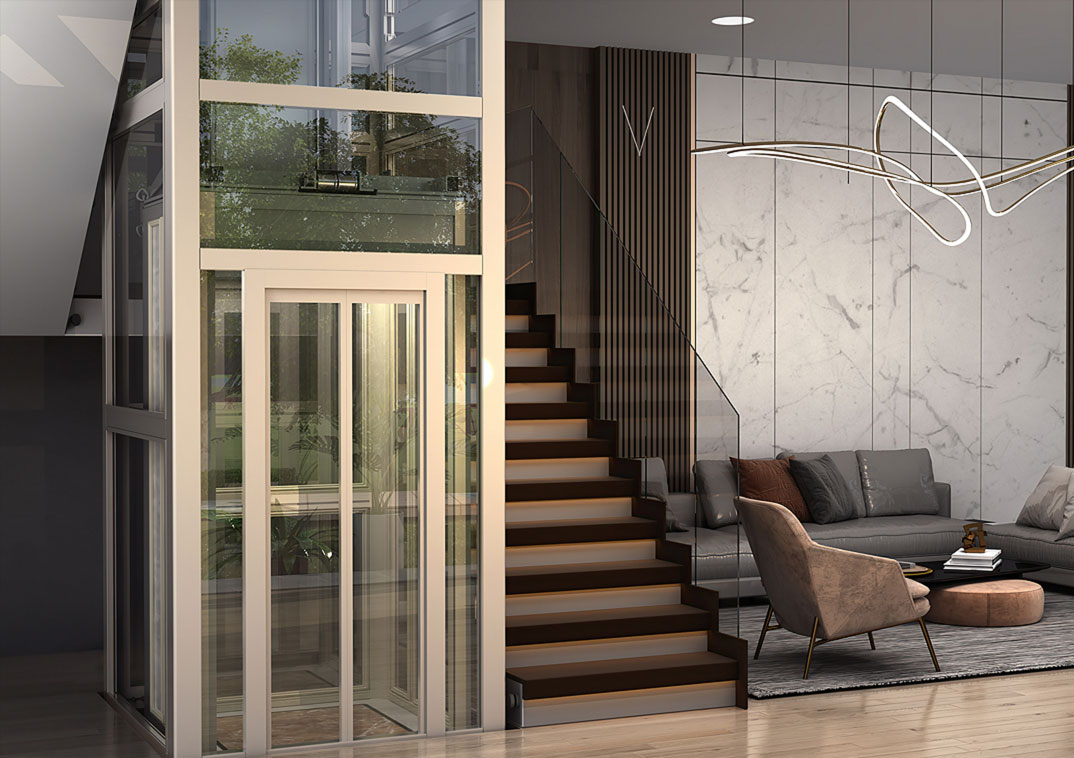
Residential towers with deep basement parking are the clearest case for a car parking elevator: multiple stops, independent access for residents at any hour, and the ability to integrate with building security and access-control systems. For single-family villas or duplex homes adding a below-grade garage, a compact compact villa elevator solutions for residential vehicle access can sometimes be adapted where space is tight and a full vehicle elevator shaft isn't justified by the number of cars involved.
Commercial and office developments tend to fall in between. If the site has only one level to add, a stacker handles it at low cost. If the project spans three or more underground levels — increasingly common where zoning caps building height but not basement depth — the elevator's per-level cost advantage grows, since each additional stop on an existing shaft is far cheaper than excavating another stacked pit.
Car dealerships and showrooms occupy a niche of their own: throughput matters less than display flexibility, so puzzle systems or shallow stackers often work, provided the floor plate is wide enough to allow lateral movement between platforms.
Safety Compliance: What to Verify Before You Sign a Contract
Mechanized vehicle parking equipment in Europe falls under the EN 14010 safety standard governing power-driven vehicle parking equipment, which sets requirements for both manually and automatically controlled systems handling vehicles up to roughly 2,500 kg within defined dimensional limits. Equipment outside that scope — larger vehicles, or systems built around an enclosed shaft rather than an open platform — typically falls under separate lift directives, which is one more reason the "elevator vs. stacker" distinction isn't just semantic.
Before signing, buyers should ask for documentation covering anti-fall mechanical locks, overload sensors, and emergency lowering procedures in the event of power loss. For readers who want a broader walkthrough of how these safety layers work across different system architectures, deeper look at parking garage elevator types and safety systems covers the mechanisms in more detail.
Finally, confirm which testing body certified the specific model — not just the manufacturer's general product line — and request the certificate before finalizing pit dimensions, since changes after excavation begins are costly to reverse.