en
en  English
 中文简体
中文简体
 русский
 عربى
عربى
Content
What Is an Elevator?
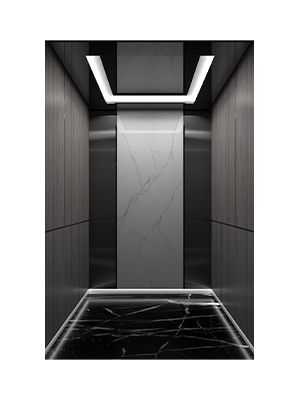
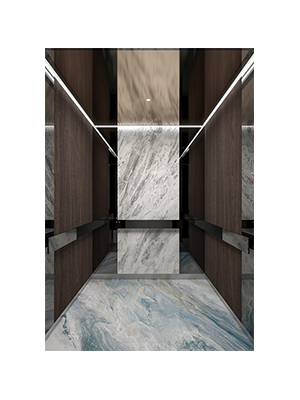
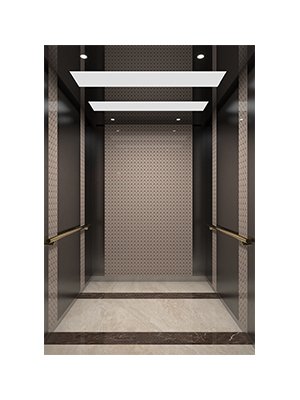
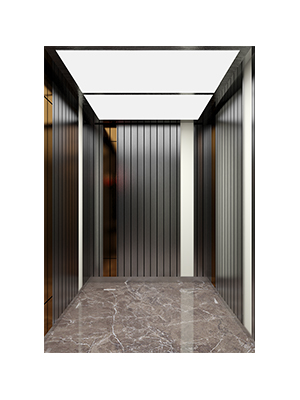
An elevator is a motorized vertical transportation system designed to move people or goods between the floors of a building. At its core, it consists of an enclosed cabin — commonly called a car — that travels up and down within a fixed shaft, guided by rails and powered by one of several drive mechanisms.
There are three primary elevator types used in modern construction:
- Traction elevators use steel hoist ropes and a counterweight system driven by a motorized sheave. They are the standard choice for mid- to high-rise buildings, offering speeds from 1.0 m/s up to 4.0 m/s and load capacities well above 1,000 kg.
- Hydraulic elevators use pressurized fluid and a piston mechanism to lift the car. They are reliable and cost-effective for low- to mid-rise applications (typically up to six floors), though they require a machine room and are more sensitive to temperature changes.
- Machine room-less (MRL) elevators integrate the drive components directly into the hoistway, eliminating the need for a dedicated machine room. This design saves up to 10% of usable building area while consuming up to 40% less energy compared with conventional traction models.
Passenger elevators are found in office towers, apartment complexes, hospitals, hotels, and warehouses — anywhere reliable vertical mobility is required. Beyond passengers, specialized variants such as freight elevators, hospital bed elevators, car elevators, and dumbwaiter elevators extend the concept to a wide range of cargo and logistical needs.
How Escalators Differ from Elevators
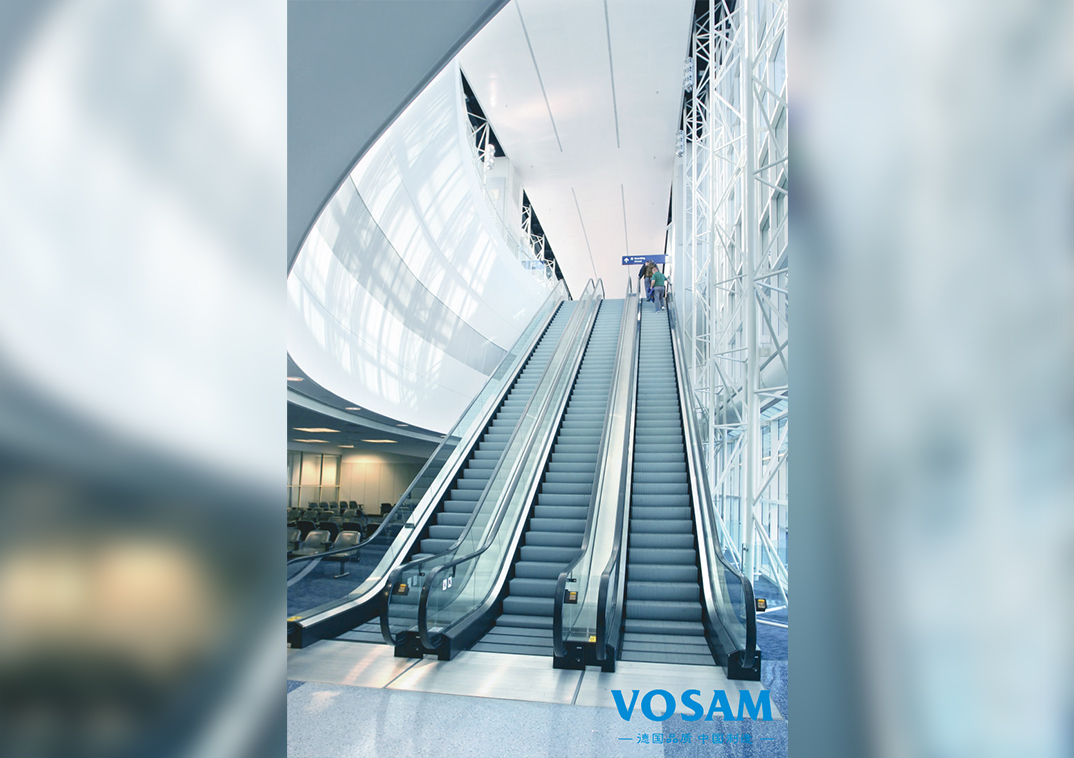
While elevators move people vertically in an enclosed cabin, escalators take a fundamentally different approach: they are power-driven, continuously moving staircases set at a fixed incline — typically 30° or 35° — connecting adjacent floors. Unlike an elevator, an escalator has no doors, no waiting time, and no capacity limit per cycle, making it ideal for high-traffic environments where passenger flow is constant.
| Feature | Elevator | Escalator |
|---|---|---|
| Movement | Vertical (any number of floors) | Inclined (adjacent floors only) |
| Passenger capacity | Fixed per trip | Continuous flow |
| Accessibility | Wheelchair, stretcher, stroller-friendly | Limited for mobility-impaired users |
| Typical locations | Offices, hospitals, residential towers | Airports, metro stations, shopping malls |
| Energy use | Only during trips; regenerative drives save energy | Runs continuously; VFD sensors reduce idle consumption |
| Lifespan | 15–20 years | 10–15 years |
For facilities requiring both high throughput and universal accessibility, escalators and elevators are routinely deployed together. Shopping centers, for example, use escalators to handle peak crowd flow while moving walkways and elevators serve passengers with strollers, luggage, or mobility devices.
Key Components of an Escalator
Understanding escalator anatomy is the first step toward effective maintenance. The main structural element is the truss — a welded steel framework that spans the rise between floors and supports every other component. Housed within the truss, a motor drives a continuous step chain, which carries the individual steps in a closed loop.
Other critical components include:
- Step rollers – guide the steps smoothly along the track; wear or contamination here causes vibration and noise.
- Handrail drive system – synchronizes handrail speed with step speed; misalignment is a leading cause of user trips and falls.
- Comb plates – the interlocking teeth at the top and bottom landings that guide passengers safely on and off; damaged teeth are a direct safety hazard.
- Skirt brushes – mounted along the skirt panels to prevent items from being drawn into the gap between the steps and the skirt.
- Controller and safety devices – the electronic brain of the escalator, managing speed, direction, and emergency stops. These components are particularly vulnerable to moisture and require regular inspection.
Modern escalator products from manufacturers like Vosam add variable frequency drive (VFD) technology to this foundation, automatically reducing step speed — or halting the unit entirely — when no passengers are detected, delivering no-load energy savings exceeding 60%.
Why Regular Escalator Maintenance Matters
Escalators operate in some of the most demanding environments imaginable: subway stations, international airports, and large retail centers where tens of thousands of passengers step on and off every day. This constant mechanical stress means that deferred maintenance does not simply reduce comfort — it creates measurable safety risk and accelerates component failure.
From a regulatory standpoint, ASME A17.1/CSA B44 — the Safety Code for Elevators and Escalators — mandates that every escalator maintain a documented Maintenance Control Program (MCP) on-site, specifying exactly which examinations, tests, lubrication tasks, and adjustments must be performed and at what intervals. Most jurisdictions additionally require annual third-party inspections, and results must be posted near the escalator or available at the terminal. Failure to comply can result in fines, permit suspension, or forced shutdown.
Beyond compliance, a structured maintenance program delivers three tangible business benefits:
- Extended service life – a well-maintained escalator routinely reaches or exceeds its 15-year design lifespan; a neglected unit may require major overhaul within 7–8 years.
- Reduced unplanned downtime – predictive and preventive maintenance catches step-chain stretch, bearing wear, or controller faults before they cause a mid-day shutdown.
- Lower total operating cost – replacing worn parts proactively costs a fraction of emergency call-outs and component replacements driven by full mechanical failure.
Escalator Maintenance Checklist
The table below summarizes a recommended maintenance schedule aligned with ASME A17.1 guidance. Only licensed elevator and escalator mechanics should carry out this work; building owners and managers are responsible for ensuring qualified companies are engaged.
| Frequency | Maintenance Tasks |
|---|---|
| Monthly | Inspect comb plates and skirt panels for damage; check handrail tension and speed synchronization; verify all emergency stop buttons; clean step surfaces and landing areas; check controller for error codes. |
| Quarterly | Lubricate step chains, rollers, and tracks; inspect step rollers for wear or flat spots; test safety devices (anti-reversal, overspeed governor); check motor and drive belt tension; inspect truss for corrosion or structural anomalies. |
| Annually | Full safety test per ASME A17.1 / local code; replace worn step rollers, brushes, or comb segments; inspect and clean control cabinet and wiring; verify MCP documentation is complete and up to date; schedule third-party inspector for code compliance sign-off. |
| After weather events | Inspect control boxes and electronic components beneath thresholds for water ingress; check for corrosion on steel step-chain links; test all electrical safety circuits before returning unit to service. |
It is worth noting that maintenance responsibility transfers to the building owner once equipment is installed, tested, and placed into service. The original equipment manufacturer (OEM) provides code-compliant hardware and technical documentation; ongoing upkeep is the owner's obligation, typically fulfilled through a service agreement with a certified elevator company.
Choosing a Reliable Elevator and Escalator Supplier
Selecting the right manufacturer at the procurement stage directly impacts how straightforward maintenance will be for the life of the equipment. Key factors to evaluate include the availability of spare parts, the clarity of technical documentation provided with the MCP, and whether the manufacturer's design incorporates features that reduce wear — such as VFD drives, sealed bearing assemblies, or remote monitoring capabilities.
Zhejiang Vosam Elevator Co., Ltd. is a professional enterprise specializing in the design, research and development, manufacturing, sales, installation, and maintenance of elevator and escalator systems. With products ranging from passenger elevators and escalators to moving walkways, freight elevators, and villa elevators — all operating at speeds from 0.4 m/s to 4.0 m/s and load capacities from 300 kg to 10,000 kg — Vosam serves residential buildings, commercial complexes, hospitals, airports, and logistics facilities across more than 80 countries. All core components meet EN81-20 and EN115 international standards, and the product range is backed by ISO 9001 and CE certifications.
Investing in quality equipment from a reputable manufacturer, paired with a disciplined maintenance program, is the most cost-effective strategy for safe, long-lived vertical transportation. Contact Vosam today to discuss the right escalator or elevator solution for your project.