en
en  English
 中文简体
中文简体
 русский
 عربى
عربى
Content
- 1 Expected Elevator Lifespan and Service Duration
- 2 Component Lifespan Breakdown
- 3 Factors Affecting Elevator Longevity
- 4 Modernization vs. Replacement Decision Points
- 5 Code Compliance and Regulatory Timeline
- 6 Energy Efficiency and Operating Cost Considerations
- 7 Different Elevator Types and Their Lifespans
- 8 Signs That Replacement or Modernization Is Needed
- 9 Planning for Elevator Replacement
- 10 Extending Elevator Service Life
- 11 Real-World Longevity Examples
Expected Elevator Lifespan and Service Duration
Modern elevators typically last 20 to 30 years with proper maintenance and regular servicing. However, individual components have varying lifespans—some parts may require replacement after just 5-10 years, while the structural framework can remain serviceable for 40-50 years or longer. The actual lifespan depends heavily on usage intensity, maintenance quality, environmental conditions, and technological obsolescence rather than pure mechanical wear.
High-traffic commercial elevators in office buildings making 200-300 trips daily typically reach the end of their economic life around the 20-25 year mark, while low-rise residential elevators with lighter usage may function reliably for 30-35 years before requiring major modernization. The decision to replace or modernize often comes down to safety code compliance, parts availability, and energy efficiency rather than complete mechanical failure.
Component Lifespan Breakdown
Machine Room Equipment
The traction machine, motor, and drive system represent the heart of the elevator and typically last 15-25 years depending on design and maintenance. Older DC motors and mechanical relay controllers from the 1980s-1990s often operate reliably beyond 30 years, though finding replacement parts becomes increasingly difficult and expensive.
Modern variable-frequency drive (VFD) systems introduced since the 2000s offer superior performance but contain electronic components with shorter lifespans. The inverter boards and capacitors in VFD systems typically require replacement every 10-15 years, while the motor itself may last 20-25 years. Preventive replacement of wear components like motor bearings, brake linings, and sheave grooves extends overall machine longevity significantly.
Control Systems and Electronics
Electronic control systems face the shortest functional lifespan due to rapid technological advancement and component obsolescence. Controllers installed in the 1990s-2000s typically become unsupportable after 15-20 years as manufacturers discontinue parts and technical support. Modern microprocessor-based systems from the 2010s onward may face similar obsolescence timelines despite their advanced capabilities.
The challenge extends beyond simple mechanical failure—functioning controllers become liability risks when diagnostic tools, programming equipment, and trained technicians are no longer available. Buildings often modernize control systems every 15-20 years to maintain code compliance and access to service support, even when the original equipment remains operational.
Structural and Safety Components
Guide rails, car frames, and hoistway doors constitute the longest-lasting elevator components, often remaining serviceable for 40-50 years or more. These structural elements require periodic adjustment and occasional repair but rarely necessitate complete replacement unless damaged by accidents or severe corrosion.
Safety components follow different replacement schedules based on regulatory requirements:
- Wire ropes: 10-15 years in high-traffic applications, up to 20 years in low-traffic installations
- Governor ropes: 15-20 years with regular inspection and lubrication
- Safety brake components: 20-25 years with periodic adjustment and testing
- Buffer springs: 25-30 years unless damaged by car overrun incidents
Factors Affecting Elevator Longevity
Usage Intensity and Traffic Patterns
The number of daily trips directly impacts component wear rates and overall system lifespan. A residential elevator making 20-30 trips daily experiences dramatically less wear than a commercial elevator in a busy office tower making 250-300 trips. High-traffic elevators typically require major component replacements 30-40% sooner than low-traffic units.
Peak usage patterns also matter—elevators experiencing heavy morning rush hour traffic with continuous operation strain motors and brakes more than units with evenly distributed traffic throughout the day. Buildings with extreme peak loads often implement multiple elevator banks to distribute wear across several units rather than overworking a single installation.
Maintenance Quality and Frequency
Properly maintained elevators routinely exceed their expected service life by 5-10 years, while neglected units may require premature replacement. Industry standards recommend comprehensive maintenance visits every 30 days for commercial installations and every 60-90 days for low-traffic residential units. This schedule allows technicians to identify and address wear before minor issues escalate into major failures.
Critical maintenance activities that extend elevator life include:
- Monthly lubrication of guide rails, door tracks, and mechanical linkages
- Quarterly wire rope inspection and measurement for wear and stretching
- Annual load testing and safety device certification
- Biennial full-load brake testing and adjustment
- Regular cleaning of machine room equipment to prevent overheating
Environmental Conditions
Environmental factors significantly impact component degradation rates. Elevators in climate-controlled buildings with stable temperatures and low humidity last considerably longer than units exposed to temperature extremes, moisture, or corrosive atmospheres. Coastal installations face accelerated corrosion from salt air, potentially reducing component life by 20-30% without protective coatings and enhanced maintenance.
Machine room conditions particularly affect electronic components and motors. Poorly ventilated rooms allowing temperatures to exceed 85-90°F accelerate capacitor degradation and insulation breakdown. Conversely, climate-controlled machine rooms maintaining 65-75°F temperatures extend electronic component life by several years beyond typical expectations.
Modernization vs. Replacement Decision Points
| Elevator Age | Typical Condition | Recommended Action | Approximate Cost |
|---|---|---|---|
| 0-10 years | Minimal wear | Routine maintenance only | $3,000-6,000/year |
| 10-15 years | Moderate wear | Component upgrades | $15,000-40,000 |
| 15-20 years | Significant wear | Partial modernization | $50,000-100,000 |
| 20-25 years | End of economic life | Full modernization | $100,000-200,000 |
| 25+ years | Obsolete/unsafe | Complete replacement | $150,000-300,000 |
The decision between modernization and complete replacement depends on multiple factors beyond simple age. Buildings often choose full modernization over replacement when the existing hoistway, guide rails, and structural components remain sound, as this approach costs 40-60% less than complete removal and reinstallation.
Complete replacement becomes necessary when hoistway dimensions no longer meet current codes, structural damage compromises safety, or when the building requires capacity increases that existing infrastructure cannot support. Modern code requirements for door opening widths, car dimensions, and accessibility features sometimes mandate replacement of otherwise serviceable equipment.
Code Compliance and Regulatory Timeline
Building codes and safety standards evolve continuously, creating functional obsolescence for older elevators even when mechanically sound. The American Society of Mechanical Engineers (ASME) updates elevator safety code A17.1 every three years, with major revisions occurring approximately every decade. Elevators must comply with the code edition in effect at installation, but jurisdictions increasingly require upgrades to meet current standards during major renovations.
Significant code changes affecting elevator lifespan include:
- Phase I and Phase II firefighter service requirements (1970s-1980s): Retrofits cost $8,000-15,000 per elevator
- Emergency communication systems (2000 code): Two-way voice communication requirements replacing emergency phones
- Door restrictors and door lock monitoring (2007 code): Prevents doors opening between floors, costs $3,000-5,000 per elevator
- Machine room ventilation standards (2016 code): Climate control requirements for electronic equipment protection
Many jurisdictions allow elevators to operate under their original installation code indefinitely, but require upgrades when modernization work exceeds 50% of replacement cost. This threshold often triggers full code compliance requirements, making minor repairs economically unfeasible and forcing complete modernization decisions.
Energy Efficiency and Operating Cost Considerations
Operating costs increasingly drive replacement decisions as energy-efficient technologies mature. Hydraulic elevators installed in the 1980s-1990s consume 2,500-4,000 kWh annually, while modern gearless traction elevators with regenerative drives use just 500-800 kWh for equivalent service. Over a 10-year period, energy savings alone can justify modernization costs in high-traffic installations.
Modern elevator technologies offering substantial operating cost reductions include:
- Regenerative drives that return energy to the building electrical system during descent, reducing consumption by 25-40%
- LED lighting replacing incandescent or fluorescent fixtures, cutting car lighting costs by 75-85%
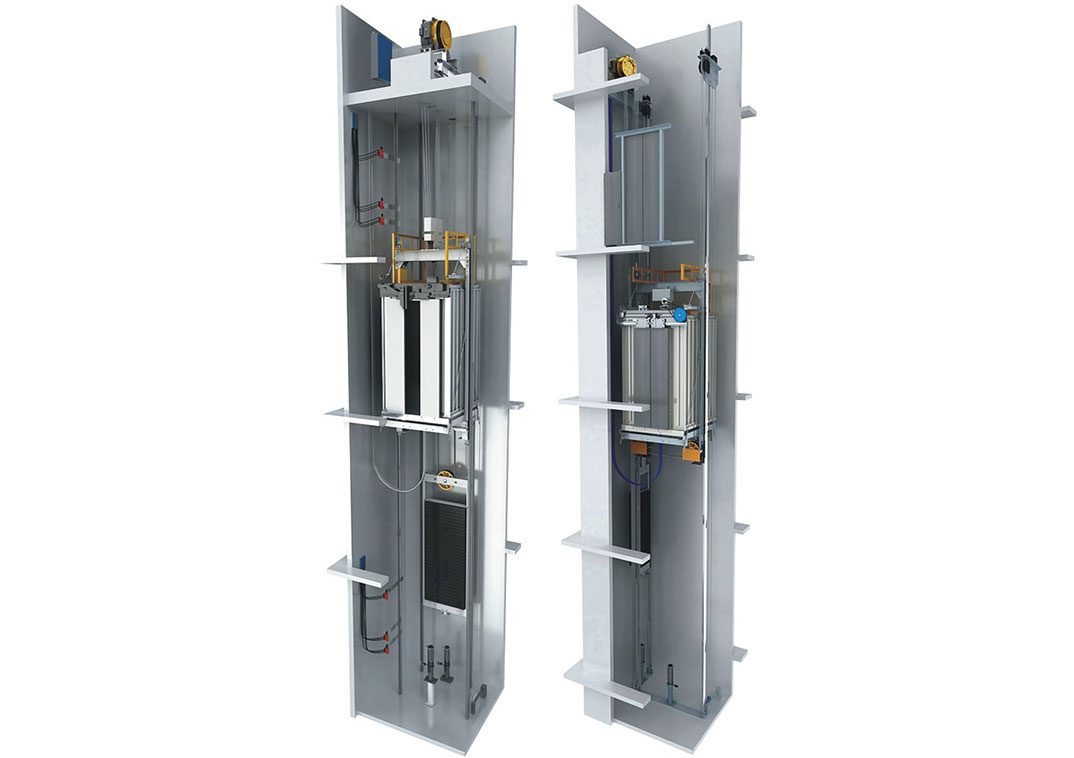
- Machine-room-less (MRL) designs eliminating HVAC costs for dedicated equipment spaces
- Advanced dispatch systems reducing unnecessary trips and optimizing energy consumption
Buildings pursuing LEED certification or other green building standards often modernize elevators earlier than mechanical necessity would dictate, typically at the 15-18 year mark rather than waiting until 20-25 years. The combination of energy savings, reduced maintenance costs, and sustainability credits justifies the investment timeline.
Different Elevator Types and Their Lifespans
Hydraulic Elevators
Hydraulic elevators generally last 20-25 years before requiring major modernization, with the hydraulic cylinder and fluid system being primary wear points. Underground hydraulic cylinders face particular challenges from soil moisture and corrosion, with some jurisdictions now requiring replacement of single-bottom cylinders with double-bottom designs or conversion to holeless hydraulic systems after 25-30 years.
The hydraulic pump and motor assembly typically requires overhaul or replacement at 15-20 years due to seal wear, valve deterioration, and fluid contamination. Environmental regulations concerning hydraulic fluid disposal and cylinder leakage increasingly make these systems less attractive for long-term operation, accelerating replacement decisions despite functional capability.
Geared Traction Elevators
Geared traction machines represent the workhorses of mid-rise buildings and routinely operate for 25-30 years with proper maintenance. The gear reduction mechanism requires periodic oil changes and bearing replacement but proves remarkably durable. Many installations from the 1980s-1990s remain in service today, though most have received controller and drive system upgrades.
The limitation with geared machines often comes from noise and vibration as gears wear, creating tenant complaints that drive modernization even when the equipment remains mechanically sound. Newer gearless machines offer quieter operation and better ride quality, making them attractive replacements despite higher initial costs.
Gearless Traction Elevators
High-speed gearless traction elevators in commercial towers represent the longest-lasting installations, with some units from the 1950s-1960s still operating after 50+ years. The simple, robust design of older DC gearless machines provides exceptional durability, though finding replacement parts and qualified technicians becomes increasingly difficult.
Modern permanent magnet gearless machines introduced in the 2000s promise similar longevity with improved efficiency, though insufficient time has passed to verify 30+ year service life. The elimination of motor brushes and slip rings in PM motors should theoretically extend life, but electronic drive components may create new maintenance challenges.
Signs That Replacement or Modernization Is Needed
Building owners should monitor specific indicators that signal approaching end-of-life conditions requiring intervention. Waiting until complete failure occurs creates safety risks and potentially strands building occupants, making proactive replacement planning essential.
Mechanical Warning Signs
- Increasing breakdown frequency: More than 3-4 service calls monthly indicates deteriorating reliability
- Extended repair times: Delays finding replacement parts signal obsolescence
- Ride quality degradation: Excessive vibration, noise, or jerky movements during acceleration/deceleration
- Door operation issues: Repeated door problems often indicate worn door operator components reaching end-of-life
- Leveling problems: Inconsistent floor-to-car alignment suggests controller or selector issues
Economic Warning Signs
Financial indicators often trigger modernization decisions before mechanical failure occurs. Annual maintenance costs exceeding 8-10% of replacement cost generally signal economic end-of-life, as investing in aging equipment becomes less financially prudent than systematic replacement.
Parts availability represents another critical factor—when common replacement parts require custom fabrication or extended lead times exceeding 4-6 weeks, the elevator has entered obsolescence regardless of mechanical condition. Service companies may decline maintenance contracts on obsolete equipment, forcing building owners into reactive repair modes that prove both expensive and unreliable.
Planning for Elevator Replacement
Establishing Reserve Funds
Prudent building management establishes elevator replacement reserves beginning at installation. Setting aside $3,000-5,000 annually per elevator creates adequate funding for modernization at the 20-25 year mark without requiring special assessments or emergency financing. Commercial buildings with multiple elevators should implement formal capital replacement planning that coordinates elevator work with other major building systems.
The reserve calculation should account for inflation and technology advancement—a $150,000 modernization today may cost $200,000-250,000 in 20 years. Conservative planning assumes 3-4% annual cost inflation for elevator work, requiring corresponding reserve contribution increases over time.
Project Timeline Expectations
Elevator modernization or replacement projects require substantial planning lead time and cause significant building disruption. Typical timelines include:
- Initial assessment and engineering: 2-3 months to evaluate conditions and develop specifications
- Bidding and contractor selection: 1-2 months for competitive proposals and evaluation
- Equipment manufacturing: 3-6 months depending on customization requirements
- Installation and testing: 2-4 months per elevator for full modernization
- Inspection and certification: 2-4 weeks for regulatory approval
Buildings with multiple elevators typically modernize one unit at a time to maintain service, extending total project duration but reducing operational impact. A four-elevator building might complete full modernization over 12-18 months to balance disruption against maintaining adequate vertical transportation.
Extending Elevator Service Life
Strategic interventions can extend functional elevator life 5-10 years beyond typical replacement timelines, providing significant economic benefits. The key lies in identifying and addressing specific obsolescence issues while maintaining serviceable mechanical components.
Controller Upgrades Without Full Modernization
Replacing only the control system while retaining mechanical equipment costs $35,000-60,000 per elevator—roughly 40-50% of full modernization expenses. This approach proves particularly effective for elevators with 15-20 year old controllers but mechanically sound machines, motors, and structural components. Modern microprocessor controllers interface with existing equipment through adaptor boards, providing contemporary features without complete system replacement.
Benefits include improved diagnostics, reduced callback rates, and extended parts availability for the newly installed control components. Many installations gain an additional 8-12 years of reliable service through controller-only upgrades, deferring full modernization until mechanical components genuinely require replacement.
Preventive Component Replacement
Proactive replacement of wear components before failure prevents cascade failures that damage multiple systems. Critical preventive replacements include:
- Wire ropes at 70-80% of rated life rather than waiting for inspector mandated replacement
- Door operators at first signs of irregular operation, preventing damage to door panels and frames
- Drive system capacitors and inverter boards on scheduled intervals rather than at failure
- Selector and position feedback devices showing intermittent faults before complete failure occurs
While preventive replacement increases short-term maintenance budgets by 15-25%, it reduces emergency repair costs and extends overall system life by preventing secondary damage that occurs when worn components fail catastrophically.
Real-World Longevity Examples
Examining actual elevator installations provides perspective on achievable service life under various conditions. The Empire State Building's original 1930s Otis elevators operated for over 70 years before complete modernization in the mid-2000s, demonstrating exceptional durability of well-maintained equipment in controlled environments. However, these units required extensive ongoing maintenance and parts fabrication that would prove economically unfeasible for most buildings.
More representative examples include:
- 1980s hydraulic elevators in low-rise office buildings: Typically modernized at 22-28 years due to controller obsolescence and energy inefficiency
- 1990s geared traction elevators in mid-rise residential buildings: Often receive controller upgrades at 18-22 years and full modernization at 28-35 years
- 2000s machine-room-less elevators in new construction: Early units now approaching 20-25 years show good durability but face parts availability questions
The common pattern shows that properly maintained elevators consistently achieve 25-30 year service lives with strategic component replacements, while inadequately maintained units often require premature replacement at 15-20 years despite theoretical capability for longer operation.