en
en  English
 中文简体
中文简体
 русский
 عربى
عربى
Content
- 1 What Is a Freight Elevator
- 2 Freight Elevator Classification System
- 3 Key Differences Between Freight and Passenger Elevators
- 4 Fascinating Facts About Freight Elevators
- 5 Hydraulic vs. Traction Freight Elevators
- 6 Special-Purpose Freight Elevator Variants
- 7 Loading and Operating Procedures
- 8 Maintenance Requirements and Longevity
- 9 Code Requirements and Inspection Standards
- 10 Selecting the Right Freight Elevator
What Is a Freight Elevator
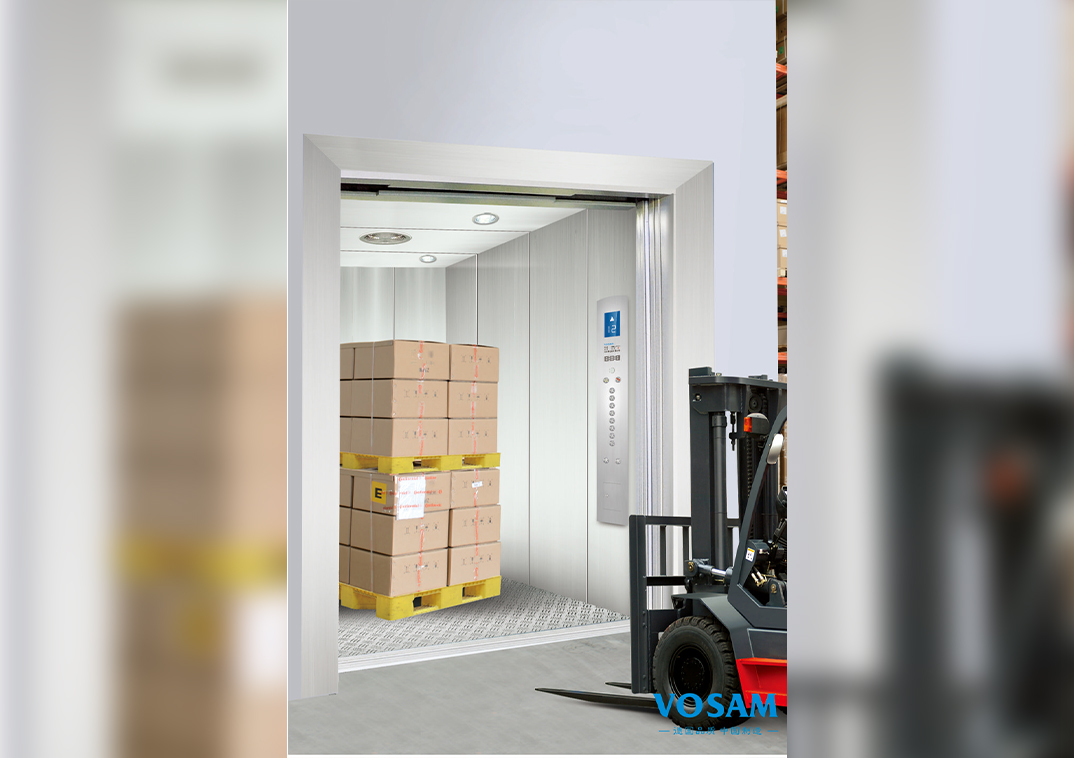
A freight elevator is a specialized vertical transportation system designed to carry heavy goods, materials, and equipment rather than passengers. These industrial elevators feature reinforced construction, higher weight capacities (typically 2,500-10,000 pounds), and ruggedized interiors built to withstand the impact and wear from loading carts, pallets, and industrial equipment. Unlike passenger elevators that prioritize comfort and aesthetics, freight elevators emphasize durability, load capacity, and practical functionality for moving cargo between building floors.
Freight elevators are distinguished by several key characteristics: reinforced car platforms and guide rails, protective wall panels made from steel or heavy-duty materials, manual or bi-parting doors that open wider than standard elevators, and slower operating speeds that prioritize safety over speed. Building codes classify freight elevators into five distinct classes (A through E) based on loading method and capacity, with Class C general freight elevators being the most common in commercial and industrial facilities.
Freight Elevator Classification System
The American Society of Mechanical Engineers (ASME) A17.1 safety code establishes five freight elevator classes that define loading methods, capacity requirements, and design specifications. Understanding these classifications helps facility managers select appropriate equipment for their operational needs.
| Class | Loading Method | Typical Capacity | Common Applications |
|---|---|---|---|
| Class A | General freight, hand-loaded | 2,500-5,000 lbs | Retail, light manufacturing |
| Class B | Motor vehicles only | 4,000-8,000 lbs | Parking garages, auto dealers |
| Class C1 | Industrial trucks, rider allowed | 5,000-10,000 lbs | Warehouses, distribution centers |
| Class C2 | Industrial trucks, rider not allowed | 5,000-10,000 lbs | Manufacturing facilities |
| Class C3 | Heavy concentrated loads | 10,000-20,000+ lbs | Heavy industry, steel mills |
The classification determines critical design elements including floor construction, car structure reinforcement, and safety device requirements. Class C elevators dominate industrial installations because they accommodate forklift and pallet jack loading methods that define modern warehouse operations. The distinction between C1 and C2 relates to whether operators ride the industrial truck into the elevator—C1 permits this while C2 requires operators to walk alongside equipment during transport.
Key Differences Between Freight and Passenger Elevators
Structural Reinforcement and Load Distribution
Freight elevator car platforms receive substantial structural reinforcement to handle concentrated point loads from equipment wheels and pallet supports. The floor typically consists of steel plate ranging from 1/4 inch to 1/2 inch thickness supported by heavy-duty I-beams spaced at 12-18 inch intervals. This construction contrasts sharply with passenger elevator floors using lighter-gauge steel or aluminum panels over minimal framing.
Wall panels in freight elevators employ 14-16 gauge stainless steel or powder-coated steel rather than decorative finishes. Many installations include removable or hinged protective panels along lower walls to facilitate maintenance and replacement after impact damage. The guide rail system supporting the car uses heavier rails—typically T-section rails ranging from 18-27 pounds per foot compared to 8-16 pounds per foot for passenger applications.
Door Design and Operation
Freight elevator doors differ fundamentally from passenger elevator configurations. The most common freight door types include:
- Vertical bi-parting doors that split horizontally and retract upward and downward, maximizing clear opening height
- Single-slide doors similar to passenger elevators but constructed from heavier materials with reinforced edge protection
- Two-speed side-sliding doors offering wider openings (up to 10-12 feet) for oversized cargo
- Manual swing doors in older installations or specialized applications requiring maximum durability
Door protection systems prove essential given the harsh operating environment. Freight elevators incorporate photoelectric door detectors positioned at multiple heights to prevent closing on protruding loads, plus bumper strips and electronic edge sensors that provide redundant obstruction detection. Door closing forces are calibrated higher than passenger elevators—up to 30 pounds of force compared to 5 pounds for passenger units—to overcome resistance from debris while remaining safe.
Speed and Performance Characteristics
Freight elevators operate at slower speeds than comparable passenger elevators, typically 100-200 feet per minute (fpm) for hydraulic units and 200-350 fpm for traction systems. This contrasts with passenger elevators that routinely achieve 400-700 fpm in mid-rise buildings. The reduced speed prioritizes load stability and minimizes stress on structural components during starts and stops with heavy, potentially unbalanced cargo.
Acceleration and deceleration rates are similarly conservative, with freight elevators typically limited to 2-3 feet per second squared compared to 4-5 feet per second squared for passenger units. This gentler motion prevents cargo shifting and reduces dynamic loading on suspension components, extending mechanical component lifespan despite the heavier static loads.
Fascinating Facts About Freight Elevators
Extreme Capacity Records
The world's highest-capacity freight elevators serve specialized industrial applications with extraordinary load requirements. Shipyard elevators in South Korea can lift entire ship sections weighing up to 200,000 pounds, using multiple-cylinder hydraulic systems or massive traction machines with redundant safety systems. Nuclear power plant construction sites employ temporary freight elevators capable of transporting reactor components exceeding 150,000 pounds between facility levels.
More commonly, heavy-duty industrial freight elevators in steel mills, automotive manufacturing plants, and aerospace facilities routinely handle 20,000-50,000 pound loads. These installations require reinforced hoistways with steel-reinforced concrete walls, specialized machine rooms housing motors comparable to small industrial equipment, and dedicated electrical services providing 200-400 amps at 480 volts.
Historical Development Milestones
Elisha Graves Otis demonstrated his safety elevator in 1854 specifically for freight applications—the famous Crystal Palace demonstration showed a platform elevator carrying heavy cargo, not passengers. This safety brake invention revolutionized vertical goods transport in warehouses and factories, enabling the construction of taller industrial buildings. Early freight elevators used steam-powered hydraulic systems or belt-driven mechanisms achieving speeds of just 40-60 fpm.
The introduction of electric traction elevators in the 1880s-1890s dramatically improved freight elevator performance, though hydraulic systems remained dominant for low-rise freight applications due to their simpler construction and lower costs. Modern hydraulic freight elevators descend from these early designs, while traction freight elevators share lineage with passenger elevator technology adapted for heavier loads.
Unique Safety Features
Freight elevators incorporate safety systems beyond those found in passenger elevators:
- Load-weighing systems that prevent operation when cargo exceeds rated capacity, using strain gauges or hydraulic pressure sensors
- Platform leveling systems that maintain car alignment within 1/4 inch of floor level despite varying loads
- Automatic return-to-terminal features that send unattended elevators to designated floors to prevent unauthorized use
- Enhanced buffer systems in the pit using hydraulic or spring buffers rated for impact at rated speed with full load
- Redundant overspeed governors that activate safety brakes if descent exceeds safe parameters
Economic Impact and Usage Statistics
Freight elevators represent approximately 15-20% of new elevator installations in North America, with the majority serving warehouses, manufacturing facilities, and hospitals. A single freight elevator in a busy distribution center may complete 100-200 trips daily, moving 50,000-100,000 pounds of goods per day. Over a 20-year service life, such an elevator transports an estimated 300-500 million pounds of cargo.
The cost differential between freight and passenger elevators proves substantial—a basic 5,000-pound freight elevator installation costs $75,000-$125,000, while a comparable-height passenger elevator runs $60,000-$90,000. However, heavy-duty Class C elevators with 10,000+ pound capacities can exceed $200,000-$300,000 installed due to structural reinforcement requirements and specialized components.
Hydraulic vs. Traction Freight Elevators
Hydraulic Freight Elevator Characteristics
Hydraulic systems dominate low-rise freight applications (2-6 floors) due to their simple construction, lower installation costs, and excellent load-handling capabilities. These elevators use one or more hydraulic cylinders—either underground (in-ground) or alongside the hoistway (holeless)—to lift the car platform directly. Typical hydraulic freight elevators achieve travel heights up to 60 feet and operate at speeds of 100-150 fpm.
Advantages of hydraulic freight elevators include inherent load-bearing capability from the cylinder supporting the car from below, relatively low maintenance requirements, and ability to handle severe overload conditions without catastrophic failure. The main limitation involves travel height—hydraulic cylinders longer than 60-70 feet become impractical due to cost, installation complexity, and geological constraints for in-ground cylinders.
Traction Freight Elevator Advantages
Traction freight elevators use wire ropes passing over a drive sheave with the car on one end and counterweight on the other, similar to passenger elevators but with heavier-duty components. These systems prove necessary for freight service exceeding 6 floors and offer speeds up to 500 fpm in specialized applications, though 200-350 fpm represents typical freight service speeds.
Traction systems provide superior energy efficiency for mid-rise and high-rise applications, with the counterweight offsetting approximately 40-50% of rated load plus car weight. This balance reduces motor power requirements significantly—a 10,000-pound traction freight elevator might use a 40-50 horsepower motor compared to 75-100 horsepower for equivalent hydraulic capacity. The trade-off involves higher installation costs and more complex maintenance requirements.
| Characteristic | Hydraulic Freight | Traction Freight |
|---|---|---|
| Typical Speed Range | 100-150 fpm | 200-350 fpm |
| Maximum Travel Height | 60-70 feet | Unlimited |
| Installation Cost (5,000 lb) | $75,000-$110,000 | $95,000-$140,000 |
| Energy Efficiency | Lower (no counterweight) | Higher (counterweighted) |
| Machine Room Size | Smaller (pump unit only) | Larger (machine, controller) |
| Ride Quality | Moderate (fluid dynamics) | Excellent (controlled motion) |
Special-Purpose Freight Elevator Variants
Automobile Elevators
Vehicle elevators (Class B) represent specialized freight elevators designed exclusively for transporting cars, trucks, and motorcycles. These installations feature platform dimensions ranging from 9x20 feet to 12x25 feet to accommodate vehicles from compact cars to full-size pickups. Capacity typically ranges from 5,000-8,000 pounds, with heavy-duty variants reaching 12,000-15,000 pounds for commercial trucks or multiple vehicles.
Safety features include wheel guides or tracks that align vehicles during loading, non-slip floor surfaces, and interlocks preventing operation unless the car is properly positioned. Parking garage installations often use automatic leveling systems maintaining platform alignment within 1/8 inch to facilitate smooth vehicle entry and exit. The flooring incorporates drainage channels to handle fluids and weather-related moisture from vehicles.
Hospital Service Elevators
Medical facilities employ specialized freight elevators for transporting beds, equipment, supplies, and sometimes food service carts. These units blend freight elevator capacity (typically 4,000-6,000 pounds) with passenger elevator refinements including finished interiors, smooth acceleration, and quiet operation. Hospital service elevators maintain speeds of 300-500 fpm to minimize patient transport time while providing the dimensional capacity for beds plus medical staff.
Unique features include antibacterial wall finishes, easily cleaned surfaces, bright LED lighting for medical procedures during transport, and redundant power systems ensuring operation during emergencies. Many installations incorporate stretcher/bed keying systems that give priority access during emergency situations, overriding normal elevator dispatch algorithms.
Scenic and Exterior Freight Elevators
Some freight elevators serve dual purposes, combining cargo capacity with architectural prominence. Exterior-mounted freight elevators on industrial buildings often feature glass or open-cage designs allowing visual monitoring of cargo during transport. These installations must incorporate weather protection including heated hoistways in cold climates, water-resistant components, and corrosion-resistant finishes suitable for outdoor exposure.
Performance considerations for exterior freight elevators include wind loading calculations for exposed hoistways, thermal expansion compensation for components experiencing temperature variations, and enhanced lubrication systems using synthetic fluids that maintain viscosity across wide temperature ranges. Installation costs run 25-40% higher than interior freight elevators due to weatherproofing and structural requirements.
Loading and Operating Procedures
Safe Loading Practices
Proper freight elevator loading requires attention to weight distribution and stability. Loads should be centered on the platform to prevent uneven cable loading in traction elevators or tilted car conditions in hydraulic systems. When using forklifts or pallet jacks, operators must account for the combined weight of equipment plus cargo—a 3,000-pound forklift carrying a 4,000-pound load totals 7,000 pounds against elevator capacity.
Critical safety protocols include:
- Never exceed rated capacity—freight elevator overload sensors may permit 5-10% overload before lockout
- Distribute loads evenly across the platform rather than concentrating weight in corners
- Ensure loads are stable and secured before initiating travel—shifting cargo can damage walls and doors
- Keep load height below 7-8 feet to maintain visibility and prevent contact with ceiling-mounted components
- Exit forklift from elevator in forward direction when possible to maintain operator visibility
Operating Modes and Controls
Freight elevators typically offer multiple operating modes suited to different operational needs. Automatic mode functions like passenger elevators with call buttons on each floor and car operating panel controls. This mode suits general freight movement where operators accompany loads or use the elevator for periodic transport.
Many freight elevators include constant pressure operation requiring continuous button pressure to move the car, providing precise control for loading operations. This mode prevents unintended car movement during forklift entry/exit and allows operators to stop instantly if problems arise. Some installations offer independent service mode that dedicates the elevator to a single user, preventing interruption by other floor calls until the operator releases control.
Maintenance Requirements and Longevity
Freight elevators require more intensive maintenance than passenger elevators due to harsh operating conditions and heavy loads. Recommended maintenance intervals include monthly comprehensive inspections for high-traffic installations and bimonthly service for lighter-duty applications. The more frequent schedule addresses accelerated wear from impact damage, debris accumulation, and continuous heavy loading.
Critical Maintenance Points
- Guide rail lubrication every 15-30 days to prevent excessive wear from heavy car loads
- Door track cleaning and adjustment monthly due to debris from cargo loading
- Wire rope inspection quarterly with particular attention to wear at terminations and over sheaves
- Hydraulic fluid analysis annually for hydraulic elevators to detect contamination or degradation
- Brake adjustment and testing every six months due to frequent heavy-load stops
- Motor bearing inspection and lubrication quarterly under heavy-duty operating conditions
Expected Service Life
Well-maintained freight elevators typically achieve 15-20 year service lives before requiring major modernization, somewhat shorter than the 20-30 years expected from passenger elevators. The reduced lifespan reflects harsher operating conditions including impact damage, exposure to dirt and moisture, and continuous heavy loading cycles. Hydraulic cylinders may require replacement at 15-18 years due to seal deterioration, while traction machine components often last 20-25 years with proper maintenance.
Annual maintenance costs for freight elevators run $4,000-$8,000 depending on capacity and usage intensity, compared to $3,000-$5,000 for comparable passenger elevators. The higher costs reflect additional labor hours, more frequent component replacement, and specialized parts. Heavy-duty Class C elevators in continuous-use applications may incur $10,000-$15,000 annual maintenance expenses due to accelerated wear and the need for preventive component replacement.
Code Requirements and Inspection Standards
Freight elevators must comply with ASME A17.1 Safety Code for Elevators and Escalators, which establishes design, construction, installation, operation, inspection, testing, maintenance, alteration, and repair requirements. Annual inspections by certified elevator inspectors verify compliance with safety standards including load testing, safety device function, and emergency communication systems.
Key code requirements specific to freight elevators include:
- Capacity plates prominently displayed showing rated load and class designation
- Load-weighing devices preventing operation when weight exceeds 110% of rated capacity
- Enhanced buffer requirements sized for car weight plus rated load at maximum speed
- Reinforced guide rail brackets and supports calculated for dynamic loading conditions
- Five-year load testing at 125% of rated capacity to verify structural integrity
Jurisdictional authorities having jurisdiction (AHJ) may impose additional requirements beyond ASME standards. Some municipalities require monthly third-party inspections for high-capacity freight elevators in addition to annual certifications, while others mandate specific safety features like earthquake protection devices in seismic zones or backup power systems for critical facilities.
Selecting the Right Freight Elevator
Choosing appropriate freight elevator specifications requires careful analysis of operational requirements, building constraints, and budget considerations. Facility managers should evaluate several critical factors before finalizing equipment selection.
Capacity Determination
Calculate required capacity by identifying the heaviest typical load plus any material handling equipment. A warehouse moving 4,000-pound pallets with a 3,500-pound forklift needs minimum 8,000-pound capacity, though 10,000 pounds provides operational margin. Consider future needs—equipment upgrades or product line changes may increase load requirements within the elevator's 20+ year service life.
Platform size matters equally—ensure dimensions accommodate typical loads with adequate clearance. Standard freight elevator cars range from 6x8 feet (small capacity) to 10x12 feet or larger for heavy-duty applications. Custom sizes are available but increase costs by 15-30% compared to standard configurations.
Speed and Traffic Analysis
Analyze daily trip requirements to determine necessary speed and handling capacity. A facility making 100 daily trips across 4 floors needs different performance than one making 30 trips across 2 floors. Higher speeds reduce cycle time but increase costs—moving from 100 fpm to 200 fpm might add $15,000-$25,000 to installation costs while cutting cycle time by 30-40%.
Consider whether operations require dedicated freight service or if the elevator will serve multiple purposes. Mixed-use applications might justify higher speeds and improved finishes despite increased costs, while dedicated freight service prioritizes durability and capacity over speed and appearance.