en
en  English
 中文简体
中文简体
 русский
 عربى
عربى
Elevators are engineering systems where multiple components — counterweights, safety mechanisms, and structural installations — work together precisely. If you're stuck in an elevator, stay calm, press the alarm button, and call for help using the emergency phone; never attempt to force the doors open or climb out. If you're planning a freight elevator installation, expect a process that involves structural assessment, shaft preparation, and strict code compliance. And if you want to understand why elevators don't require enormous motors to lift heavy loads, the counterweight system is the answer. This article covers all three topics in practical detail.
Content
How Elevator Counterweights Work — and Why They Matter
An elevator counterweight is a weighted assembly that moves in the opposite direction of the elevator cab inside the hoistway. It's connected to the cab via steel hoist ropes routed over a sheave (pulley) at the top of the shaft. When the cab goes up, the counterweight goes down, and vice versa.
The purpose is straightforward: counterweights reduce the net load the motor must move by approximately 40–50%, dramatically lowering energy consumption and allowing smaller, more efficient drive motors. Without a counterweight, lifting a fully loaded 2,000 lb elevator car would require the motor to do all the work. With one, the system is nearly balanced, and the motor only compensates for the difference.
Standard Counterweight Composition
Counterweights are typically made of stacked cast iron or concrete filler plates held within a steel frame. The total counterweight mass is calculated as:
- Counterweight = Weight of empty cab + 40–50% of rated load capacity
- For a 3,000 lb rated elevator with a 1,500 lb cab, the counterweight would typically be around 2,700–3,000 lbs
- Counterweight frames include guide shoes that slide along rails in the hoistway, mirroring the cab's guide rail system
- A safety rope (compensation rope) may also be attached below both the cab and counterweight in taller installations to account for rope weight imbalance
Counterweight Safety Systems
Modern counterweights are equipped with their own safety devices. If the hoist rope breaks or the cab overspeed triggers the governor, counterweight safeties grip the guide rails and halt the counterweight, preventing it from free-falling in the hoistway — which would otherwise send the cab shooting upward. Counterweight buffers at the pit bottom absorb impact in emergency scenarios.
What to Do If You're Stuck in an Elevator
Getting stuck in an elevator is alarming but rarely dangerous. The vast majority of elevator entrapments are resolved within 30–60 minutes without injury — provided passengers follow the right steps. The biggest risks come from panicking and attempting self-rescue.
Immediate Steps to Take
- Stay calm. The elevator cab is structurally secure. It will not fall. Modern elevators have multiple redundant braking systems and buffers in the pit.
- Press the door open button once — if the cab is level with a floor, the doors may open normally.
- Press the alarm button (usually marked with a bell icon). This triggers an audible alert in the building and, in monitored systems, alerts a remote call center.
- Use the emergency telephone inside the cab. By law in most countries, all passenger elevators must have a two-way communication device. This connects you directly to emergency services or a monitoring center.
- Call emergency services (911) using your mobile phone if the in-cab phone fails. Give the building address and the elevator number if visible.
- Wait for trained technicians. Do not attempt to force the doors open, pry them with objects, or try to climb out through a ceiling hatch. These actions cause the majority of elevator-related injuries.
What Not to Do
- Do not try to force the doors apart — the cab may not be aligned with the floor, and stepping out into the hoistway gap is extremely dangerous
- Do not climb through the ceiling hatch unless directed by emergency personnel — this is for trained rescue workers only
- Do not jump up and down or rock the cab — while modern elevators won't be destabilized, this increases anxiety and is unnecessary
- Do not assume the elevator is in free fall if it moves slightly — controlled settling is normal as brakes engage
If There Is a Medical Emergency in the Cab
Communicate this clearly via the emergency phone or your mobile device. Emergency services can coordinate with building management for priority rescue dispatch. In buildings with firefighter service mode, emergency personnel can manually operate the elevator to the nearest floor for evacuation.
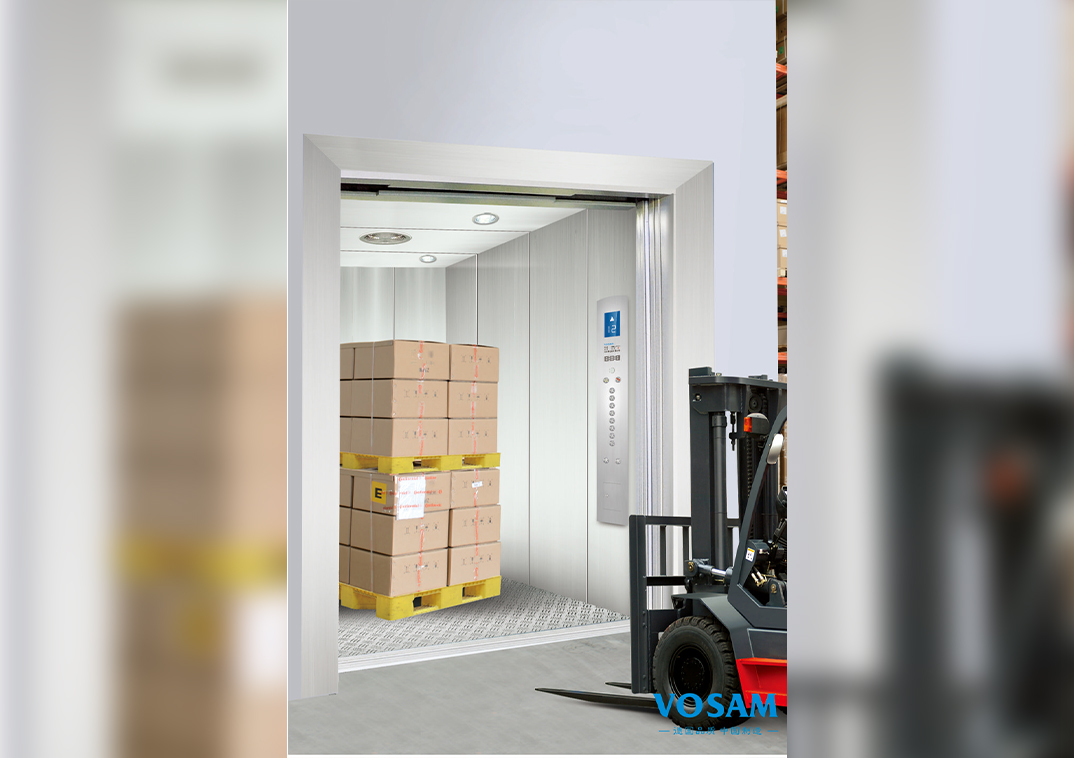
Freight Elevator Installation: What the Process Actually Involves
Installing a freight elevator is a significant construction project. Unlike passenger elevators, freight elevators are designed to carry heavy loads — typically ranging from 2,500 lbs to over 100,000 lbs — and must meet specific structural, mechanical, and code requirements. The installation process typically takes 4–12 weeks depending on complexity.
Phase 1: Site Assessment and Permitting
Before any hardware is ordered or installed, a licensed elevator contractor and structural engineer must assess the site. Key considerations include:
- Floor load capacity — the building's structural floor must support both the elevator system weight and the rated load
- Hoistway dimensions — freight elevators require larger shaft clearances than passenger units; a 10,000 lb freight elevator may need a hoistway of 14 ft × 16 ft or more
- Pit depth — typically 4–6 ft deep to accommodate buffers and safety equipment
- Overhead clearance — machine room or machine-room-less (MRL) configurations require different overhead heights
- Permits must be obtained from the local authority having jurisdiction (AHJ) before installation begins — this is non-negotiable and inspections are required at multiple stages
Phase 2: Hoistway Preparation and Rail Installation
Once permitting is in place, the hoistway (elevator shaft) is prepared. Guide rails — heavy steel T-sections — are installed vertically along the shaft walls, anchored to structural members at precise intervals (typically every 8–12 ft). Rail alignment is critical: misaligned rails cause excessive wear, noise, and safety issues.
The pit is also prepared during this phase: a concrete pit floor is poured if not already present, pit ladders and lighting are installed, and buffers (hydraulic or spring type, depending on system speed) are mounted.
Phase 3: Drive System and Counterweight Installation
Freight elevators use one of two primary drive systems:
| Drive Type | Best For | Travel Height Limit | Counterweight Required |
|---|---|---|---|
| Traction (geared or gearless) | Multi-story, high load, frequent use | Virtually unlimited | Yes |
| Hydraulic | Low-rise, 2–5 stories, lower duty cycle | ~60 ft typical | No |
For traction freight elevators, the counterweight assembly is installed on the opposite side of the hoistway from the cab. Steel hoist ropes are threaded over the machine sheave and attached to both the cab frame and the counterweight frame. Counterweight for heavy freight elevators can weigh 10,000–30,000 lbs or more and requires a crane or chain hoist for positioning during installation.
Phase 4: Cab Assembly and Door System
Freight elevator cabs are typically constructed from heavy-gauge steel with a protective interior finish. Unlike passenger elevators, freight cabs often use vertical bi-parting doors or horizontal sliding doors that can accommodate forklifts, pallets, and oversized cargo. Door widths of 6 to 10 feet are common for industrial freight applications. Power door operators are installed and interlocked with landing doors at each floor.
Phase 5: Wiring, Controls, and Final Inspection
All electrical wiring is run in conduit to code. The control panel — typically a programmable logic controller (PLC) or relay-based system — is installed in the machine room or in a controller cabinet for MRL systems. Safety circuits are wired and tested, including:
- Overspeed governor and safety gear
- Door interlocks and gate contacts at every landing
- Emergency stop switches in cab and pit
- Load-weighing device (required for some freight classifications)
- Emergency lighting and two-way communication device
A final inspection by the AHJ (Authority Having Jurisdiction) is mandatory before the elevator is placed in service. Inspectors perform load tests — typically at 125% of rated capacity — to verify structural integrity and safety system performance.
Freight Elevator Installation Costs: What to Budget
Costs vary widely depending on capacity, travel height, drive type, and local labor rates. Here's a general cost breakdown to use as a planning reference:
| Elevator Type | Capacity | Estimated Install Cost |
|---|---|---|
| Hydraulic freight (2-stop) | 2,500–5,000 lbs | $40,000–$80,000 |
| Traction freight (multi-stop) | 5,000–15,000 lbs | $100,000–$250,000 |
| Heavy-duty industrial traction | 20,000–100,000+ lbs | $300,000–$1,000,000+ |
Building modifications — including hoistway construction, pit excavation, and machine room preparation — can add $20,000 to $150,000 to these figures depending on the existing structure. Always obtain at least three quotes from licensed elevator contractors and verify they carry proper insurance and certification for your jurisdiction.
Key Elevator Safety Codes You Should Know
Whether you're installing a freight elevator or simply want to understand the safety framework around everyday elevator use, the relevant codes are worth knowing:
- ASME A17.1 / CSA B44 — The primary safety code for elevators and escalators in the United States and Canada; covers design, installation, operation, and inspection requirements
- ASME A17.2 — Inspection and testing guidelines for inspectors and elevator contractors
- EN 81 (Europe) — The European standard governing passenger and goods (freight) lift safety
- OSHA 1910.68 — U.S. federal requirements for mechanized equipment including freight elevators in workplace settings
- Most jurisdictions require annual inspections by a licensed elevator inspector, with certificates posted inside the cab