en
 English
 中文简体
 русский
 عربى
A small freight elevator cabin usually fails a project for one of two reasons: the goods fit the shaft but not the car, or the car fits today's pallets but not the next handling method. Before comparing finishes or door colours, confirm four numbers: clear internal width, depth and height, plus the clear door opening. These dimensions decide whether a pallet, bin, trolley or drum can enter, turn and leave without damage.
The cabin is a working envelope. Treat it as a handling tool with defined tolerances, not as a box that can be adjusted later on site.
Content
- 1 The Cabin Envelope Comes Before the Finish
- 2 How the Cabin of a Small Freight Elevator Is Sized
- 3 Materials and Build Quality That Matter Daily
- 4 Door and Loading Details for Tight Spaces
- 5 Safety, Tolerances and Inspection Points
- 6 Procurement Questions Before You Approve the Cabin
- 7 Installation and Maintenance Practicalities
The Cabin Envelope Comes Before the Finish
The first decision is not stainless steel or powder-coated steel. It is the load route. A cabin of a small freight elevator may look generous in a brochure drawing, but the usable space can shrink by 50 mm to 150 mm once wall panels, door tracks, control boxes, handrails and protective bumpers are installed. Measure clear dimensions between finished surfaces, not between structural walls.
Check the door opening with the same care. A wide car with a narrow door is a bottleneck. If the user moves standard pallets, confirm that the pallet can pass the door, sit fully on the cabin floor and still leave room for the operator or a trolley handle. For waste bins, laundry carts and catering containers, check the turning circle as well as the straight-line fit.
A useful rule is to design around the largest item expected in the next five years, then add a small working margin. That margin is not wasted space; it is the difference between a cabin that is used daily and one that is avoided because loading takes too long.
How the Cabin of a Small Freight Elevator Is Sized
Shaft size, cabin size and door size are related but not interchangeable. The shaft must accommodate the car, guides, counterweight, travelling cables and clearances. The cabin must then provide enough internal space after finishes and fittings. A common procurement mistake is to approve a shaft drawing and a car drawing from different documents without checking the finished clear dimensions together.
Clear Dimensions Versus Shaft Dimensions
Ask for a dimensioned cabin drawing that shows internal width, internal depth, internal height, door clear opening, door height, sill position and any protrusions. Mark the load direction. For a pallet truck, the critical dimension may be width at the door; for a long roll cage, it may be diagonal clearance inside the cabin.
| Check point | What to confirm | Practical effect |
|---|---|---|
| Clear internal width and depth | Measure between finished panels, including bumper rails and control boxes | A pallet may enter but not turn, slowing every trip |
| Door clear opening | Width and height with the door fully open, including tracks and sill | The door often limits the load more than the cabin floor |
| Rated load and floor loading | Uniform load, concentrated load and trolley wheel pressure | A small cabin can still face high point loads from drums or carts |
| Floor-to-sill transition | Sill height, ramp need, drainage and wheel impact | Small steps cause jolts, delays and damage to goods or flooring |
| Internal protrusions | Handrails, light fittings, door equipment and emergency devices | Useful space falls and goods snag during loading |
Materials and Build Quality That Matter Daily
For a small freight elevator cabin, the floor usually takes the hardest wear. Check the floor material, thickness, anti-slip pattern and replaceability. A light-duty cabin used for boxes may be fine with a durable vinyl or coated steel floor. A cabin used for pallets, drums or trolleys needs a floor that resists point loads, impact and repeated cleaning.
Wall panels should be strong enough to resist trolley corners and routine knocks without permanent deformation. Removable panels can help maintenance, but they must not rattle loose or reduce clear width. Protective bumpers at cart height are often more valuable than a premium decorative finish.
Lighting should be bright enough to read labels and see the floor edge, but fittings must be protected from impact. Ventilation matters in small cabins, especially where goods may sit briefly during loading. If the cabin is used for food, waste or laundry, confirm that surfaces can be cleaned and that drainage or spill containment has been considered.
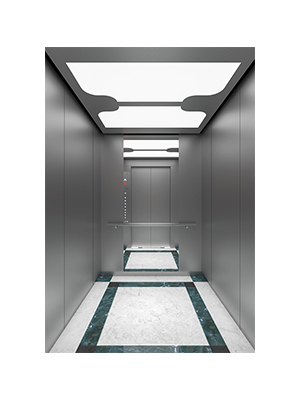
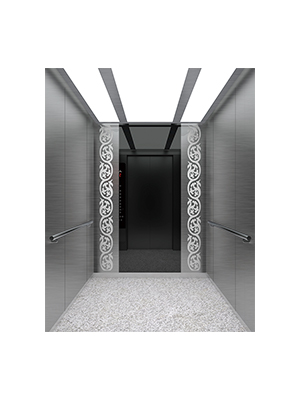
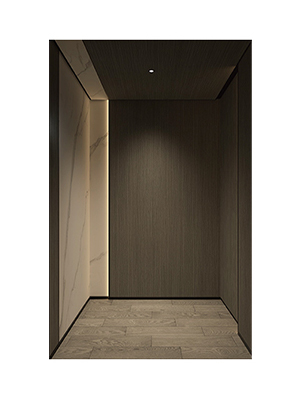
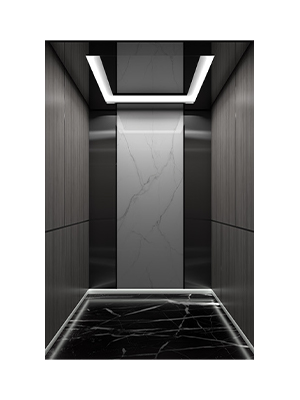
For compact goods movement, a freight elevator product line can be configured around the cabin rather than forcing the cabin around a standard passenger car. The right starting point is the load, not the catalogue image.
Door and Loading Details for Tight Spaces
Door type affects usable space. A vertical bi-parting door may suit a narrow frontage, while a horizontal sliding door can preserve headroom. A swing door may be simple, but it needs clear space outside the cabin and can be awkward in busy areas. Confirm the door operation with the actual trolley or pallet, not with a tape measure alone.
Check the sill and the floor transition. A small lip can stop a wheel, tip a bin or damage a drum. If goods are wheeled in, ask for a smooth transition detail and confirm how the sill behaves under load. Also check whether the door can be opened from inside in an emergency and whether the internal controls are protected from goods.
Loading time is a cost. A cabin with a good door opening and a flat, clear floor may move more goods than a slightly larger cabin with a narrow door and awkward internal fittings.
Safety, Tolerances and Inspection Points
Small cabins must still meet the safety requirements for the intended duty. Look for overload protection, door interlocks, emergency stop, emergency lighting, ventilation and a floor surface that remains slip-resistant when wet or dusty. Guards and toe protection matter where trolleys are used. The key safety features of modern freight elevators should be reviewed against the actual loading method, not treated as a generic checklist.
Dimensions have tolerances. A 20 mm reduction in clear width can matter when a pallet is already close to the limit. Ask the supplier to state the measurement basis: structural opening, unfinished wall, finished wall or internal panel face. Confirm who checks the site before manufacture and what happens if the measured shaft differs from the approved drawing.
Inspection and maintenance access should be planned into the cabin design. Control boxes, light fittings and door equipment should remain reachable without dismantling goods protection. A cabin that is safe on day one but difficult to inspect later is a poor procurement choice.
Procurement Questions Before You Approve the Cabin
- What are the finished clear width, depth and height inside the cabin?
- What is the clear door opening with the door fully open?
- What is the rated load, and what concentrated load can the floor accept?
- Which items must enter, turn and leave the cabin in normal use?
- Are bumpers, floor protection, lighting and ventilation included?
- How will the sill and floor transition handle trolley wheels and pallets?
- What site dimensions must be verified before production starts?
- Which safety devices are included, and how will they be tested?
Include a simple load sketch in the enquiry. Show a pallet, cart or bin to scale and mark the door position. Suppliers can then check the cabin envelope against real handling needs instead of quoting from a standard size alone.
Installation and Maintenance Practicalities
Small freight elevator cabins are often installed in existing buildings, warehouses or back-of-house areas where space is tight. Confirm how panels will be carried in, how the floor will be protected during installation and whether the cabin can be assembled inside the shaft. Check that fixings do not interfere with guide rails or door equipment.
Ask for a maintenance plan that covers door tracks, sill cleaning, floor condition, lighting, ventilation and safety devices. In a goods environment, dust, grit and impact damage accumulate quickly. A cabin designed for easy cleaning and part replacement will stay serviceable longer than one that depends on special finishes alone.
The cabin of a small freight elevator is a compact working space with little room for guesswork. Approve it from the load backward: clear door opening, clear floor area, height, floor loading and door operation. Get the finished dimensions in writing, check tolerances before manufacture and match the safety features to the way goods will actually be handled. That approach keeps a small cabin productive, safe and easy to maintain.